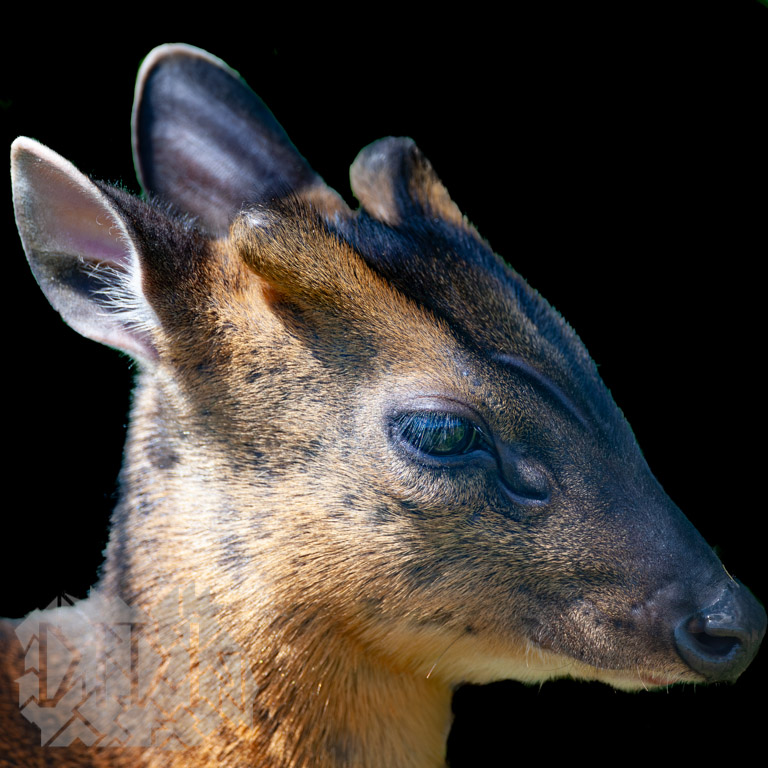
Muntjac (Muntiacus reevesi) - Cervidae (22/06/2008) Tottington Wood, Small Dole, Henfield. Nothing else quite like it given its small size, only about the size of a German Shepherd dog. Showing the classic V shaped ridge on its face.
Muntjac (Muntiacus reevesi) - Cervidae (22/06/2008) Tottington Wood, Small Dole, Henfield.
Red Deer ♂︎ (Cervus elaphus) (29/09/2008) British Wildlife Centre, Surrey. We don't have them in Sussex as far as I know, I've just included these pics for interest. They are Britain's largest land mammal. The one in the next few photos is covered in mud, concealing its reddy/brown coat!
Red Deer ♂︎ (Cervus elaphus) (29/09/2008) British Wildlife Centre, Surrey.
Red Deer ♂︎ (Cervus elaphus) (29/09/2008) British Wildlife Centre, Surrey. Antlers are shed each Feb and start to grow back in the spring and become larger each season as the deer ages. They live in bachelor groups most of the year then in the autumn the hunt for females (also in groups) to mate with begins. The males "rut" to decide dominance and therefore access rights to mate with females!
Roe Deer (Capreolus capreolus) - Cervidae (12/03/2006) Pulborough RSPB Reserve. Roe Deer are reddish-brown in summer and greyer, pale brown or even black in winter. They have a white/cream rump patch but that can become less obvious in winter. This is in March.
Roe Deer (Capreolus capreolus) - Cervidae (12/03/2006) Pulborough RSPB Reserve. Pale rump patch is being displayed by the one on the left, not by the others, interestingly. But in winter sometimes they are absent in some individuals.
Roe Deer (Capreolus capreolus) - Cervidae (12/03/2006) Pulborough RSPB Reserve.
Roe Deer (Capreolus capreolus) - Cervidae (12/03/2006) Pulborough RSPB Reserve. Barbed wire is so dangerous for any animal, especially deer who sometimes get caught up in it.